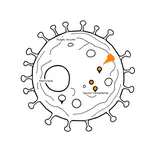
A protein’s job depends on its address — the same molecule means one thing in the nucleus and another at the membrane. Today’s digest is about teaching machines to find that address, and it runs close to the lab’s own roots in the Human Protein Atlas. Almagro Armenteros et al.’s DeepLoc predicted localization ‘relying only on sequence information,’ using ‘a recurrent neural network … and an attention mechanism.’ Stärk et al. swapped alignments for language-model embeddings, their ’light attention’ beating the state of the art ‘by about 8 percentage points.’ DeepLoc 2.0 went multi-label with protein language models and ‘highly accurate prediction of nine different types of protein sorting signals.’ On the image side, Sullivan et al. turned the HPA Cell Atlas into a video-game mini-game — ‘322,006 gamers’ making ’nearly 33 million classifications.’ Ouyang et al. ran the HPA competition, where ‘2,172 teams’ produced models that beat the prior effort ‘by ~20%.’ And Kobayashi et al.’s cytoself learned a localization atlas ‘fully self-supervised,’ ‘from coarse classes … to the subtle localization signatures of individual protein complexes.’ Every protein has an address — and we can predict it.