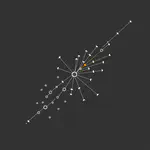
A single-cell sequencing run is a still photograph — every cell frozen at the instant it was lysed. So how do you recover motion from a photo? RNA velocity’s answer, from Sten Linnarsson’s group at Karolinska and colleagues, is beautiful: count a gene’s unspliced (new) versus spliced (mature) transcripts, and the imbalance becomes ’the time derivative of the gene expression state’ — a vector that ‘predicts the future state of individual cells on a timescale of hours.’ scVelo dropped the brittle steady-state assumptions; CellRank turned velocity into probabilistic fate maps; and the 2024 deep-learning turn — veloVI, CellRank 2 — added the one thing the method most needed: a way to know when to trust its own arrows. It’s the molecular twin of yesterday’s imaging-based cell tracking — same question, where is this cell going next, from the opposite kind of data — and it’s exactly the cell-state dynamics a virtual cell would have to reproduce.