machine-learning

Lab Newsletter — September 13, 2026: How Cells Talk
A cell’s fate isn’t written only by its own genome — it’s shaped by the signals arriving from its neighbors. For a week we’ve zoomed in on single molecules; today we listen to the conversations between whole cells, reconstructed from the same sequencing data. Efremova et al. built CellPhoneDB, ‘a novel repository of ligands, receptors and their interactions’ whose database ’takes into account the subunit architecture of both ligands and receptors,’ with ‘a statistical framework that predicts enriched cellular interactions.’ Jin et al.’s CellChat can ‘quantitatively infer and analyze intercellular communication networks,’ predicting ‘major signaling inputs and outputs’ via ‘manifold learning.’ NicheNet went further — ’linking ligands to target genes’ by folding in ‘prior knowledge on signaling and gene regulatory networks’ to find ‘active ligands and their gene regulatory effects.’ Then space returned: Cang & Nie’s SpaOTsc uses ‘structured optimal transport’ so ‘cell-cell communications are… obtained by optimally transporting signal senders to target signal receivers in space,’ and COMMOT scaled it, ‘account[ing] for the competition between different ligand and receptor species as well as spatial distances.’ Finally, NCEM brought ‘graph neural networks that estimate the effects of niche composition on gene expression.’ A tissue, it turns out, is a conversation.
Lab Newsletter — September 13, 2026: How Cells Talk
Lab Newsletter — September 11, 2026: Medicine as a Graph
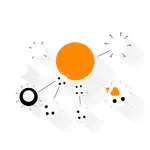
For a week we’ve modeled molecules one at a time — designed, evolved, force-fielded, screened. Today the lens widens: biology is a web of relationships, and machine learning on that web predicts the connections we haven’t drawn. Himmelstein et al. fused biomedical knowledge into Hetionet — ‘47,031 nodes of 11 types and 2,250,197 relationships of 24 types’ — and scored ‘209,168 compound-disease pairs’ for repurposing, ’entirely open.’ Zitnik et al.’s Decagon brought graph neural networks: ‘a new graph convolutional neural network for multirelational link prediction,’ predicting ’the exact side effect’ of a drug pair and ‘outperforming baselines by up to 69%.’ When COVID hit, a network-medicine consensus ranked 6,340 drugs and screened the top ones at a ‘62% success rate, in contrast to the 0.8% hit rate of nonguided screenings’ — and ‘76 of the 77’ hits act through mechanisms ’that cannot be identified using docking-based strategies.’ PrimeKG released an open precision-medicine graph of ‘17,080 diseases with 4,050,249 relationships,’ and TxGNN turned it into ‘a graph foundation model for zero-shot drug repurposing,’ finding candidates ’even for diseases with … no existing drugs,’ with ‘multi-hop’ explanations. As Li, Huang & Zitnik put it, ‘graphs are universal descriptors of systems of interacting elements.’ Reasoning over the web of biology.
Lab Newsletter — September 11, 2026: Medicine as a Graph