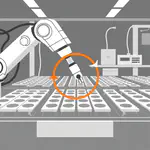
Two weeks ago this digest met the agent that wonders and the agent that decides. Today: the hands. Self-driving labs close the whole design→make→test→analyze loop with no human in the middle — an idea Robot Scientist ‘Adam’ proved in yeast back in 2009, autonomously forming and testing functional-genomics hypotheses. The modern wave is louder: Coscientist let GPT-4 plan and run real chemistry across six tasks; Berkeley’s A-Lab ran 17 days straight and synthesized dozens of inorganic targets. But A-Lab is also the field’s most honest lesson — after materials chemists challenged its results, a 2026 Author Correction trimmed the headline from ‘41 novel compounds from 58 targets’ to ‘36 from 57’ and dropped the word ’novel.’ The robot ran fine; verifying what it made was the hard part. That gap — running autonomously is easy, proving what you made is not — is exactly the prove-it discipline, and exactly why bringing the self-driving lab to living cells is the harder, more valuable frontier the lab is built for.