AI for Cell Biology Laboratory

AI for Cell Biology Laboratory

Headed by Wei Ouyang

Science for Life Laboratory Science for Life Laboratory

KTH Royal Institute of Technology KTH Royal Institute of Technology

Building AI Systems for Data-driven Cell and Molecular Biology

Welcome to the AICell Lab, a dynamic research group within the Science for Life Laboratory and KTH Royal Institute of Technology, spearheaded by Wei Ouyang. Our work is at the intersection of artificial intelligence and life sciences, fueled by the visionary Data-Driven Life Science initiative and our role in SciLifeLab’s flagship Alpha Cell program — a Wallenberg-funded effort to build predictive AI models of the human cell. We are dedicated to the design of intelligent AI frameworks that transform cell and molecular biology research.

Our Mission: To seamlessly integrate AI with cell and molecular biology, driving forward the ambitious endeavor of human cell modeling and fostering the generation of deep, actionable insights.

Our Vision: To set the standard in crafting comprehensive human cell models, catalyzing breakthroughs in in-silico experimentation, propelling forward drug discovery, and deepening the comprehension of cellular intricacies.

Discover more about AICell Lab…

Research Interests
  • AI
  • Cell and Molecular Biology
  • Whole-cell Modeling
  • Drug Discovery
  • Augmented Microscopy
  • BioImage Analysis
  • Distributed Computing
  • Open Source

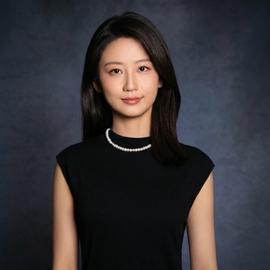
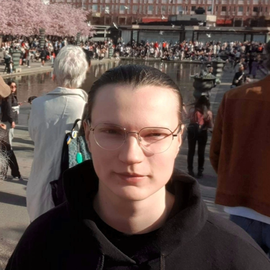
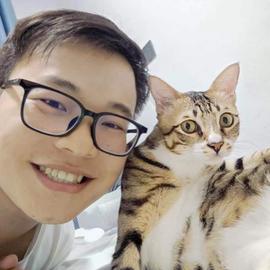
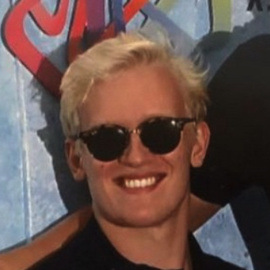
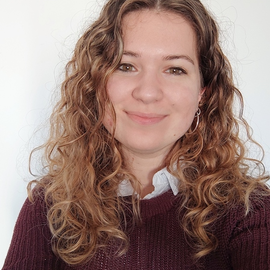
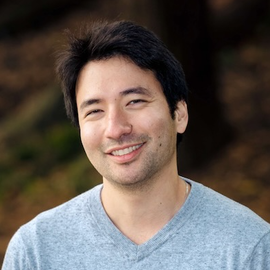
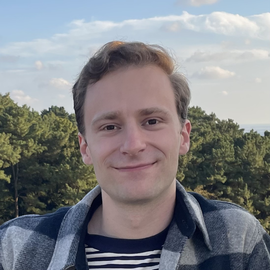
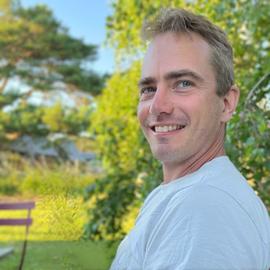
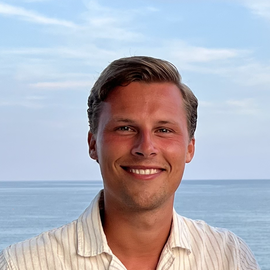
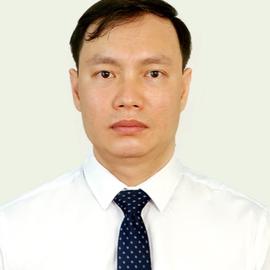
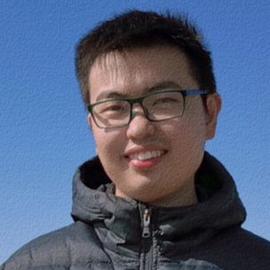
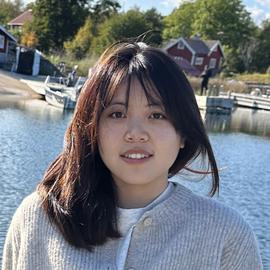
Team at AICell Lab

Lab Members

Avatar

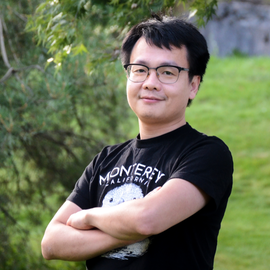
Wei Ouyang

Principal Investigator

Avatar

Happy Agent

Lab Assistant

Avatar

Florence Stadelmann

Master Student (Intern)
Avatar

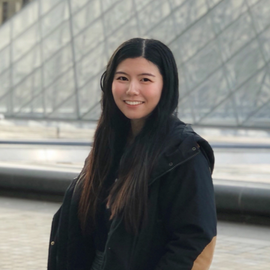
Hanzhao Zhang

Postdoc Researcher

Avatar

Joanna Hård

Postdoc Researcher

Avatar

Nils Mechtel

PhD Student

Avatar

Simin Zhang

Postdoctoral Researcher

Avatar

Simon Britzelli

Master Student

Avatar

Songtao Cheng

PhD Student

Alumni


Avatar

Alexander Holmberg

Master Student

Avatar

Caterina Fuster-Barceló

Visiting Postdoc (UC3M)
Avatar

Emma Kuttainen Thyni

Master Student

Avatar

Gabriel Reder

Postdoc Researcher

Avatar

Jeremy Metz

Research Engineer

Avatar

Konrad Olszewski

Master Student

Avatar

Linh Duong

Researcher

Avatar

Marcus Andersson

Research Engineer

Avatar

Weize Xu

Visiting PhD

Avatar

Xuan Liu

Master project student

Avatar

Yanhong Su

Postdoc Researcher

Recent Posts
Lab Newsletter — September 12, 2026: Writing the Messenger
The COVID vaccines made one thing obvious: mRNA is a medicine you can design — and the design problem is machine learning. Sample et al. paired ‘polysome profiling of a library of 280,000 randomized 5′ untranslated regions (UTRs) with deep learning,’ then used the model ’to engineer new 5′ UTRs that accurately direct specified levels of ribosome loading’ — extensible to ‘chemically modified RNA … for applications in mRNA therapeutics.’ Karollus et al. added ‘frame pooling, a novel neural network operation,’ to predict ribosome load ‘for 5′UTR of any length,’ and read a beta-thalassemia HBB variant. Wayment-Steele et al. attacked shelf-life: mRNA hydrolysis is beaten by designing structure to lower the ‘average unpaired probability,’ yielding ‘superfolder’ mRNAs with ‘≥two-fold’ half-life. LinearDesign faced ‘around 2.4 × 10^632 candidate mRNA sequences for the SARS-CoV-2 spike protein’ and, reframing it ‘as a lattice parsing problem,’ found an optimum ‘in just 11 minutes,’ raising ‘antibody titre by up to 128 times in mice.’ UTR-LM brought a ‘5′ UTR language model’ whose designs beat a therapeutic baseline by ‘32.5%.’ And Angenent-Mari et al. showed RNA that computes — deep nets predicting toehold-switch function at ‘R2 = 0.43–0.70’ vs ‘0.04–0.15’ for thermodynamic models. Designing the message, base by base.
Lab Newsletter — September 12, 2026: Writing the Messenger
Lab Newsletter — September 11, 2026: Medicine as a Graph
For a week we’ve modeled molecules one at a time — designed, evolved, force-fielded, screened. Today the lens widens: biology is a web of relationships, and machine learning on that web predicts the connections we haven’t drawn. Himmelstein et al. fused biomedical knowledge into Hetionet — ‘47,031 nodes of 11 types and 2,250,197 relationships of 24 types’ — and scored ‘209,168 compound-disease pairs’ for repurposing, ’entirely open.’ Zitnik et al.’s Decagon brought graph neural networks: ‘a new graph convolutional neural network for multirelational link prediction,’ predicting ’the exact side effect’ of a drug pair and ‘outperforming baselines by up to 69%.’ When COVID hit, a network-medicine consensus ranked 6,340 drugs and screened the top ones at a ‘62% success rate, in contrast to the 0.8% hit rate of nonguided screenings’ — and ‘76 of the 77’ hits act through mechanisms ’that cannot be identified using docking-based strategies.’ PrimeKG released an open precision-medicine graph of ‘17,080 diseases with 4,050,249 relationships,’ and TxGNN turned it into ‘a graph foundation model for zero-shot drug repurposing,’ finding candidates ’even for diseases with … no existing drugs,’ with ‘multi-hop’ explanations. As Li, Huang & Zitnik put it, ‘graphs are universal descriptors of systems of interacting elements.’ Reasoning over the web of biology.
Lab Newsletter — September 11, 2026: Medicine as a Graph

Projects

.js-id-active

Recent Publications

About SciLifeLab


Science for Life Laboratory

Our lab is located in the Science for Life Laboratory, a national center for molecular biosciences with focus on health and environmental research. SciLifeLab has been created by the coordinated effort of four universities in Stockholm and Uppsala: Stockholm University, Karolinska Institutet, KTH Royal Institute of Technology and Uppsala University.

About KTH


Royal Institute of Technology

We are affiliated to KTH Royal Institute of Technology. Since its founding in 1827, it has grown to become one of Europe’s leading technical and engineering universities, as well as a key centre of intellectual talent and innovation. We are Sweden’s largest technical research and learning institution and home to students, researchers and faculty from around the world dedicated to advancing knowledge.

Contact

Wei Ouyang, PhD, Assistant Professor at Dept. of Applied Physics, KTH Royal Institute of Technology and Science for Life Laboratory

✉️ wei.ouyang@scilifelab.se

📍 Tomtebodavägen 23A, 171 65 Solna, Sweden